Date:2026-03-13 Click:
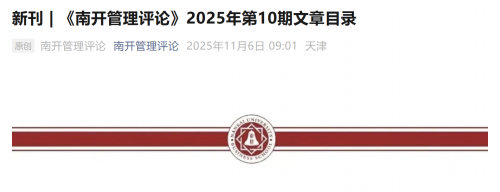
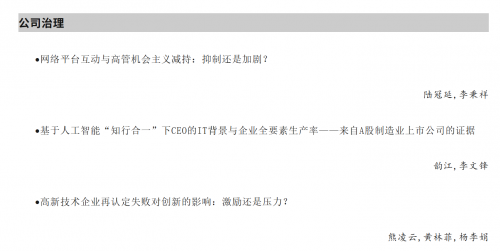
Recently, a paper titled "The Impact of High-Tech Enterprise Re-certification Failure on Innovation: Incentive or Pressure?" co-authored by Professor Xiong Lingyun, graduate student Huang Linfei, and Associate Researcher Yang Lijuan, was published in the 2025 Issue No. 10 of Nankai Business Review , a prestigious Class A journal in China.
Sustained high-quality innovation is the fundamental driving force for national rejuvenation and a key engine for high-quality economic development. To establish an institutionalized innovation incentive system, the Ministry of Science and Technology, the Ministry of Finance, and the State Administration of Taxation jointly issued the "Administrative Measures for the Recognition of High-Tech Enterprises" (hereinafter referred to as the "Measures") in 2008. The "Measures" stipulate that high-tech enterprises must undergo a review and re-recognition process every three years. This mechanism requires that policy evaluation not only examine the effects of initial recognition but also pay attention to the policy effects of re-recognition. However, since the implementation of the policy, academic research has largely focused on the policy effects of initial recognition and the innovation performance of successful enterprises, with a lack of systematic research on the policy effects of the re-recognition stage and the innovation behavior of unsuccessful enterprises. This research gap has hindered a comprehensive assessment of the policy's long-term effects and limited strategic guidance for enterprises facing re-recognition risks, highlighting an urgent need for systematic research to fill this void.
The research findings of this paper indicate that the failure of high-tech enterprise re-recognition forms a dual pressure transmission mechanism by releasing negative signals, significantly inhibiting the level of enterprise innovation output. The transmission pathway is as follows: re-recognition failure exacerbates the financing pressure and managerial performance pressure on unsuccessful enterprises, forming a closed-loop chain of "signal shock—pressure accumulation—innovation suppression." Heterogeneity analysis reveals that the inhibitory effect of re-recognition failure is synergistically moderated by the internal and external innovation environment. By widening internal pay gaps within enterprises, breaking down information barriers, enhancing the level of urban technological agglomeration, and establishing circuit courts, a four-in-one buffering mechanism of "incentive—resource—ecosystem—institution" can be constructed to effectively hedge against the negative impacts of re-recognition failure. Further research confirms that re-recognition failure has a significant signaling effect, notably increasing the capital market's attention to unsuccessful enterprises, thereby also confirming the feasibility of the pressure transmission logic of re-recognition failure. However, caution is warranted as the short-term profit-seeking nature of the capital market can amplify the pressure transmission effect, prompting enterprises to intensify financialization tendencies to maintain short-term market valuations, ultimately threatening their sustainable development. Furthermore, unsuccessful enterprises can reconstruct their competitiveness and achieve innovation capability rejuvenation and re-recognition by implementing proactive ESG strategies, fulfilling social responsibilities, promoting digital transformation, enhancing information disclosure, and introducing technology directors.
【Further Reading】
Nankai Business Review is a prestigious academic journal in the field of management. The journal adheres to the principles of combining qualitative research with quantitative research, integrating international perspectives with local contexts, merging cutting-edge academic theory with practical application, balancing comprehensive coverage with focused research, enhancing academic quality while paying attention to social evaluation, building the journal's brand alongside its author community, and improving its own development while fostering a healthy ecosystem for Chinese management scholarship.
The journal currently has a composite impact factor of 13.929, and its journal influence CI value has long ranked among the top two in Chinese management studies. It is recognized as one of the prestigious Class A Chinese journals in the management discipline at JUFE.

Jiangxi University of Finance and Economics
Contact us: Office of International Cooperation and Exchange(OICE)
Address: No.168, East Shuanggang Road, Nanchang, Jiangxi Province, PR. China 330013